
Is there a reproducibility crisis in science? – Matt Anticole
The lesson discusses the reproducibility crisis in science, illustrated by the 2011 neutrino anomaly that was ultimately traced to a simple error. It emphasizes the dynamic nature of scientific research, the importance of verification, and the systemic challenges that contribute to irreproducibility, such as pressure to publish significant results. To improve reproducibility, the lesson advocates for better access to data, enhanced peer-review processes, and a shift in focus towards publishing all results, including those that do not confirm original hypotheses.
How smudge-proof lipstick was invented | Moments of Vision 6 – Jessica Oreck
In the 1940s, as women began entering the workforce during the war, Hazel Bishop, an organic chemist, sought to create a better cosmetic solution to meet their needs. Frustrated by the messy and damaging lipsticks of the time, she experimented with various ingredients and ultimately developed one of the first smudge-proof, long-lasting lipsticks that kept lips healthy and moisturized. Her innovative product revolutionized the cosmetics industry, leading to the widespread popularity of practical cosmetics and contributing to the multi-billion dollar beauty market we see today.
How does your body know what time it is? – Marco A. Sotomayor
The lesson explores how our bodies perceive time, highlighting Michel Siffre’s 1962 cave experiment, which revealed the existence of circadian rhythms that regulate sleep-wake cycles even without external time cues. It delves into the brain’s timekeeping mechanisms, particularly the role of the suprachiasmatic nucleus (SCN) and the interplay of proteins like CLK and PER in maintaining these rhythms. Additionally, it discusses the impact of external cues, or zeitgebers, on our biological clock and how modern challenges, such as screen exposure, can disrupt our natural time perception.
The science of imagination – Andrey Vyshedskiy
The lesson explores how our brains create imaginative images by combining familiar elements through complex neural processes. It highlights the role of neuronal ensembles, which are activated in unison by the prefrontal cortex to form composite images, a process known as mental synthesis. Additionally, it discusses the importance of myelination in ensuring synchronized signal transmission, which enhances our ability to visualize novel scenarios from an early age.
Why doesn’t anything stick to Teflon? – Ashwini Bharathula
The lesson explores the science behind Teflon, a non-stick material made from polytetrafluoroethylene (PTFE), discovered accidentally in 1938. Teflon’s unique properties, such as its chemical inertness and low friction, prevent food from sticking to cookware, while its production raises environmental and health concerns. Overall, Teflon’s molecular structure and application in everyday products highlight its significance, despite the associated risks.
How high can you count on your fingers? (Spoiler: much higher than 10) – James Tanton
The lesson explores the surprising ways we can count using our fingers, revealing that we can exceed the typical limit of ten. By utilizing different counting techniques, such as counting sections of fingers and employing positional notation like binary, we can reach numbers as high as 1,023 or even more with additional finger positions. Ultimately, the lesson emphasizes the potential of our fingers as counting tools, encouraging creativity and mathematical thinking.
Why do airlines sell too many tickets? – Nina Klietsch

The lesson explores the practice of overbooking in the airline industry, where airlines sell more tickets than available seats to maximize profits based on statistical analysis of passenger behavior. While this strategy can lead to increased revenue, it raises ethical concerns regarding fairness to customers who may be denied boarding. Ultimately, the challenge lies in balancing profitability with customer satisfaction in a competitive market.
Why do we kiss under mistletoe? – Carlos Reif
The lesson explores the tradition of kissing under mistletoe, tracing its origins from ancient myths and European customs to its adoption in America. Mistletoe, a fascinating plant with over 1,000 species, is steeped in legends of love and peace, particularly in Scandinavian mythology, where it symbolizes reconciliation. Additionally, mistletoe plays a vital ecological role, supporting various wildlife and promoting biodiversity, further enhancing its significance as a symbol of unity during the holiday season.
Why are we so attached to our things? – Christian Jarrett
The lesson explores the psychological and neurological reasons behind our attachment to possessions, highlighting concepts like the endowment effect, which shows that we value items more once we own them. It discusses how our brains associate ownership with identity and how cultural influences shape our perceptions of belongings, while also acknowledging the potential for excessive attachment, such as in hoarding disorder. Ultimately, the lesson raises questions about how evolving digital technologies may impact our relationship with physical items in the future.
How the stethoscope was invented | Moments of Vision 7 – Jessica Oreck
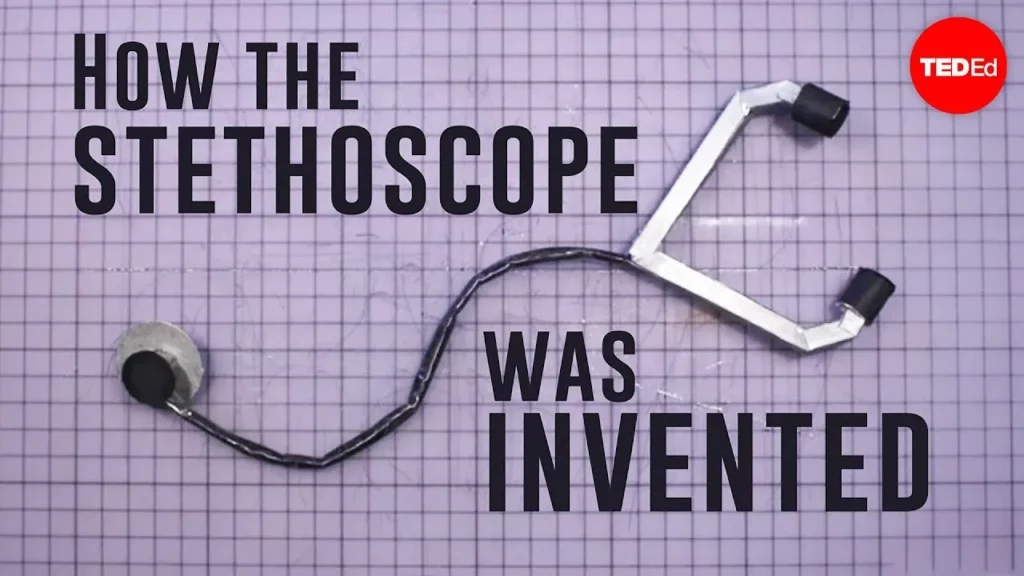
The lesson discusses the invention of the stethoscope by Dr. René Laennec in 1816, inspired by observing children using a wooden board to amplify sound. After initially using a rolled-up paper tube to listen to a patient’s heartbeat, Laennec refined his design into the first wooden stethoscope, revolutionizing how doctors diagnose illnesses by allowing them to listen to internal body sounds without direct contact. This invention not only improved patient comfort but also enhanced diagnostic accuracy, showcasing the impact of simple observations on significant innovations.