
Could we create dark matter? – Rolf Landua
The lesson discusses the mystery of dark matter, which constitutes 85% of the universe’s matter but remains undetected. It explains how the Large Hadron Collider (LHC) operates to potentially create dark matter through high-energy proton collisions, while also detailing the complex detection process for new particles. The search for dark matter is ongoing, with scientists analyzing vast amounts of data to identify rare events that could reveal new particles or enhance our understanding of the universe.
Cell membranes are way more complicated than you think – Nazzy Pakpour
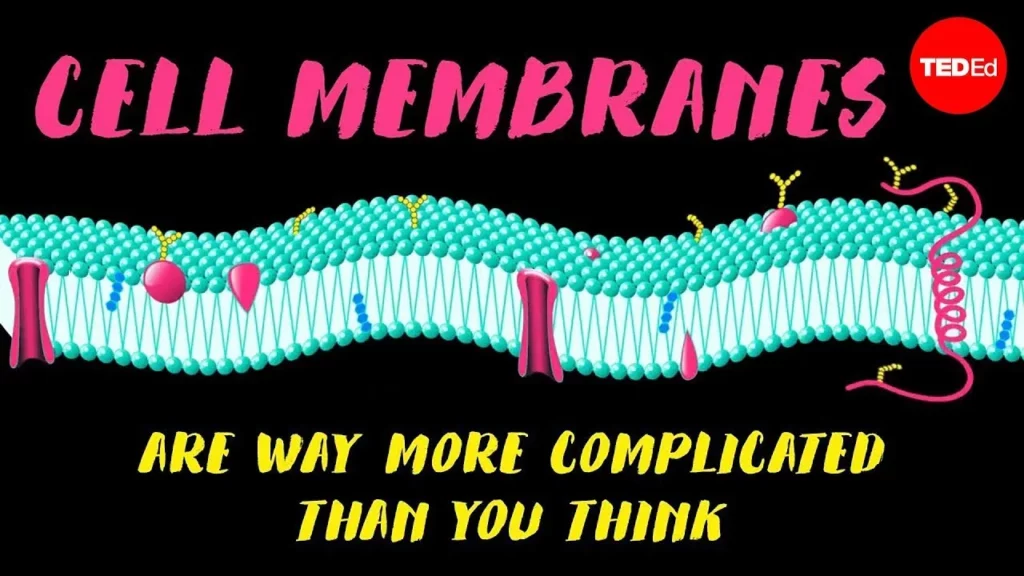
Cell membranes are intricate structures that serve as protective barriers for cells, allowing them to maintain their internal environment while facilitating communication and transport. The fluid mosaic model describes their dynamic nature, where phospholipids and proteins work together to regulate the movement of molecules, absorb nutrients, and defend against threats. This complexity is essential for the survival of all living organisms, highlighting the critical role of cell membranes in life processes.
How does impeachment work? – Alex Gendler
The lesson on impeachment explains that it is a formal process initiated by the House of Representatives to accuse a government official, including the president, of misconduct, which can lead to a trial in the Senate. Originating from the UK, impeachment serves as a check on power, allowing Congress to hold officials accountable for serious offenses such as treason or bribery. The lesson also highlights historical impeachment cases, emphasizing that while the process is rare, it plays a vital role in maintaining the rule of law within the U.S. government.
The amazing ways plants defend themselves – Valentin Hammoudi
The lesson explores the remarkable defensive strategies that plants employ to protect themselves from various threats, including insects, fungi, and larger animals. Plants utilize physical barriers like thorns and waxy coatings, as well as chemical defenses that activate when they are attacked, such as toxic raphides and signaling mechanisms to warn neighboring plants. Additionally, plants can communicate and form alliances with other organisms, like attracting parasitic wasps to control pest populations, showcasing their adaptability and resilience in the face of danger.
The science of smog – Kim Preshoff
The lesson on “The Science of Smog” explores the origins and impacts of smog, particularly focusing on the unique photochemical smog experienced in Los Angeles, which is caused by volatile organic compounds and nitrogen oxides reacting with sunlight. It highlights the health risks associated with smog, including respiratory issues, and discusses historical and contemporary efforts to combat air pollution through regulations and changes in energy use. Despite these efforts, smog remains a significant global challenge, particularly in rapidly developing urban areas.
Where do new words come from? – Marcel Danesi
The lesson explores the origins and evolution of new words in the English language, highlighting that around 1,000 new words are added to the Oxford English Dictionary each year. New words can emerge through borrowing from other languages, combining existing words, or giving old words new meanings. The lesson also discusses why some words gain popularity while others fade away, emphasizing the role of cultural changes and everyday usage in shaping language.
How many ways are there to prove the Pythagorean theorem? – Betty Fei
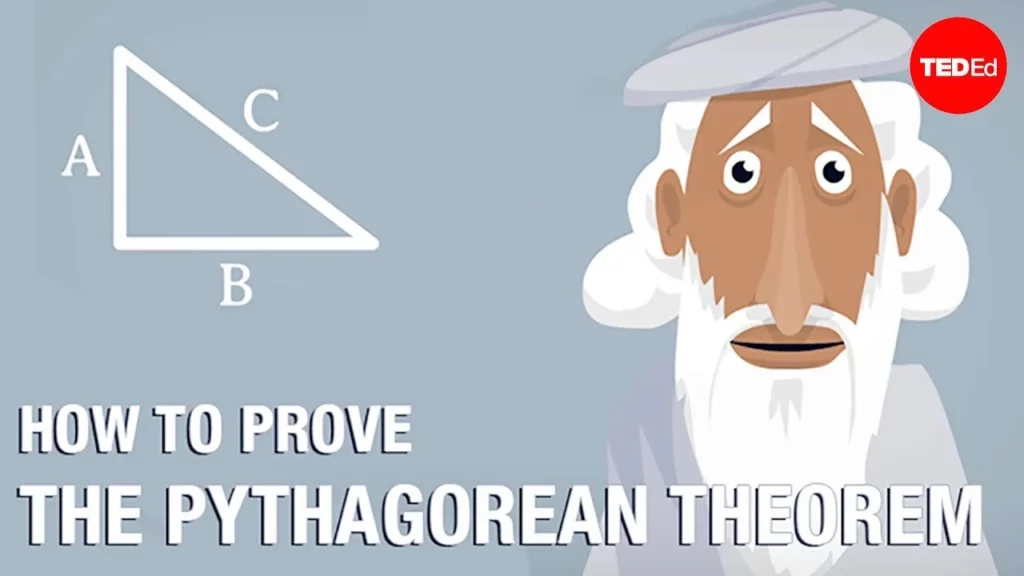
This lesson explores the Pythagorean theorem, which states that in a right triangle, the sum of the squares of the two shorter sides equals the square of the hypotenuse (a² + b² = c²). It highlights various historical proofs from figures like Euclid and Einstein, as well as ancient civilizations, demonstrating the theorem’s long-standing significance in mathematics and its practical applications in fields like construction and navigation. The lesson encourages creativity by inviting learners to develop their own proofs, contributing to the rich history of this mathematical principle.
What are gravitational waves? – Amber L. Stuver
The lesson explains gravitational waves, which are ripples in space-time caused by massive objects, such as black holes, colliding and merging. Detected for the first time by LIGO in 2015, these waves provide valuable insights into cosmic events and the nature of gravity, revealing phenomena that were previously unknown. As gravitational wave astronomy evolves, it promises to uncover further mysteries of the universe, enhancing our understanding of its dynamics.
How do executive orders work? – Christina Greer
The lesson explains the concept of executive orders, which are directives issued by the President of the United States that can have the same effect as laws without requiring Congressional approval. While they allow for swift action, especially in emergencies, executive orders must comply with the Constitution and can be challenged in court or revoked by subsequent presidents. The lesson highlights both the positive and negative historical impacts of executive orders, illustrating their significant role in shaping American policy and governance.
Should we get rid of standardized testing? – Arlo Kempf
The lesson discusses the historical context and evolution of standardized testing, highlighting its various applications and the types of tests used to measure performance. While standardized tests can provide quick insights, their effectiveness is contingent upon proper design and application, as they often fail to assess abstract skills and can be influenced by factors like test anxiety and cultural differences. Ultimately, the lesson emphasizes the importance of selecting appropriate tests for specific purposes and accurately interpreting their results to avoid negative consequences for individuals.