
Can you solve the Mondrian squares riddle? – Gordon Hamilton
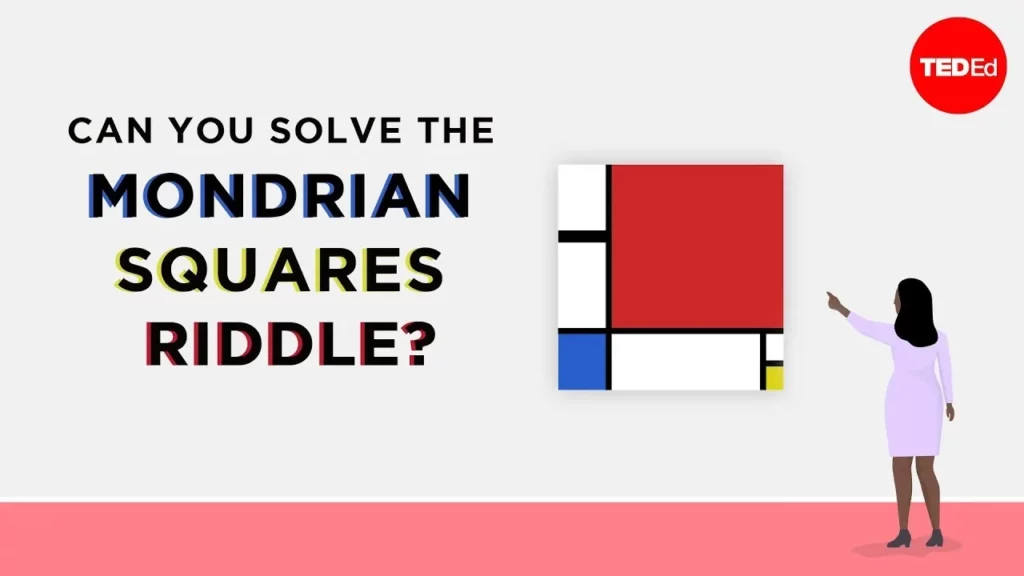
In this lesson, we explore a mathematical puzzle inspired by the abstract art of Piet Mondrian, where the objective is to cover a square canvas with unique, non-overlapping rectangles while minimizing the difference between the largest and smallest rectangle areas. Starting with a 4×4 canvas, we learn to strategically divide it into rectangles to achieve lower scores, and then we apply similar strategies to larger canvases like the 8×8. The lesson encourages experimentation and creativity, inviting participants to find their own solutions and scores for various canvas sizes.
Are there universal expressions of emotion? – Sophie Zadeh
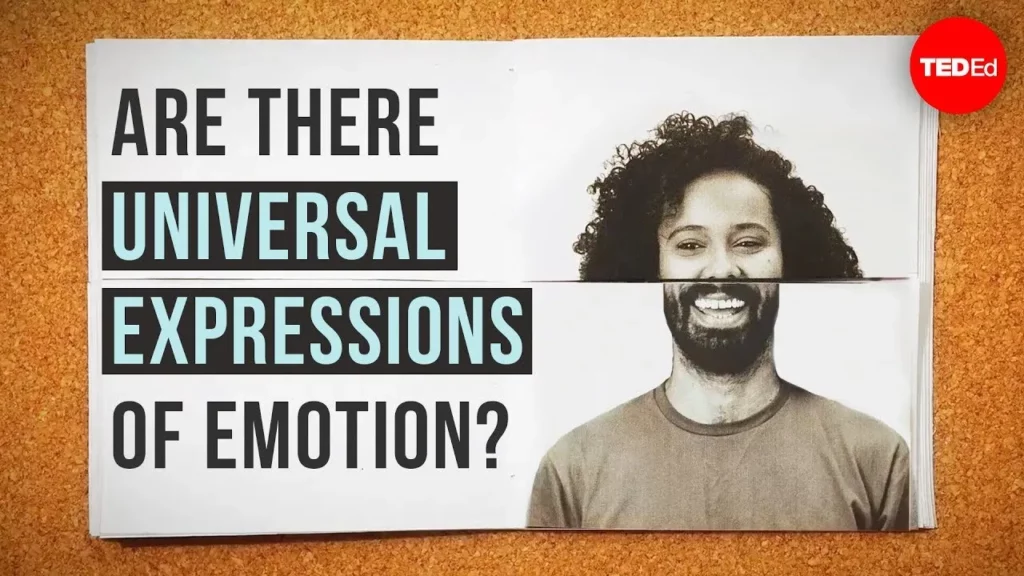
The lesson explores the concept of universal expressions of emotion, examining whether facial expressions convey the same meanings across different cultures. It discusses historical perspectives, including Darwin’s early theories and Paul Ekman’s research, which identified core emotional expressions like anger, happiness, and sadness as universally recognized. While some expressions appear innate and consistent across cultures, their intensity and appropriateness can vary, highlighting the complex interplay between biology and cultural context in emotional communication.
What is the coldest thing in the world? – Lina Marieth Hoyos
The lesson discusses the extreme cold achieved in physics laboratories, where scientists cool gases to temperatures just above absolute zero, far colder than natural cold environments like Antarctica or outer space. This is accomplished using laser beams in a magneto-optical trap, which slows down atomic movement, allowing for groundbreaking research in fields such as quantum physics and precision measurement. The exploration of ultracold atoms not only enhances our understanding of matter but also leads to advancements in technology, such as highly sensitive detectors and atomic clocks.
How exactly does binary code work? – José Américo N L F de Freitas
This lesson explains the fundamentals of binary code, the language that computers use to process and store data. It highlights how binary operates through sequences of 1s and 0s, representing various types of information such as numbers, letters, images, and sound, all while relying on the context to determine meaning. Additionally, the lesson touches on data compression techniques and explores future computing possibilities beyond binary, such as ternary and quantum computing.
History vs. Augustus – Peta Greenfield & Alex Gendler
The lesson explores the life and legacy of Augustus, the first emperor of Rome, highlighting his transition from a republic to an imperial rule. While Augustus is credited with significant achievements such as reforms, infrastructure development, and a long period of peace known as the Pax Romana, his rise to power raises questions about the concentration of authority and the potential betrayal of republican values. Ultimately, Augustus’s story serves as a reflection on the complexities of leadership and governance.
A day in the life of an ancient Egyptian doctor – Elizabeth Cox
In “A Day in the Life of an Ancient Egyptian Doctor,” we follow Peseshet, a skilled female doctor in Memphis, as she prepares for her day and attends to various patients, showcasing her medical knowledge and the unique practices of ancient Egyptian medicine. Throughout her day, she balances her responsibilities as a healer and a teacher at the House of Life, while also confronting the limitations of her profession, particularly in cases where no treatment is available. Despite the challenges she faces, Peseshet remains dedicated to her work and the well-being of her community.
How can you change someone’s mind? (hint: facts aren’t always enough) – Hugo Mercier
In the lesson “How Can You Change Someone’s Mind? (Hint: Facts Aren’t Always Enough)” by Hugo Mercier, the key takeaway is that changing someone’s mind often requires more than just presenting facts; it involves understanding and addressing their beliefs, trusted sources, and values. Effective persuasion is achieved by tailoring arguments to resonate with the audience’s perspectives and engaging in meaningful dialogue to uncover common ground, which can lead to a more productive exchange of ideas and potentially shift viewpoints.
Did ancient Troy really exist? – Einav Zamir Dembin
The lesson explores the historical existence of Troy, as depicted in Homer’s *Iliad*, and the archaeological efforts to uncover its truth. Initially dismissed as myth, scholars like Frank Calvert and Heinrich Schliemann believed in a real city behind the legendary tales, leading to excavations at Hisarlık, which revealed multiple layers of ancient settlements. While definitive proof of the Trojan War remains elusive, evidence of a significant Bronze Age city has been found, prompting UNESCO to recognize the site as the archaeological location of Troy.
Can you solve the rogue AI riddle? – Dan Finkel
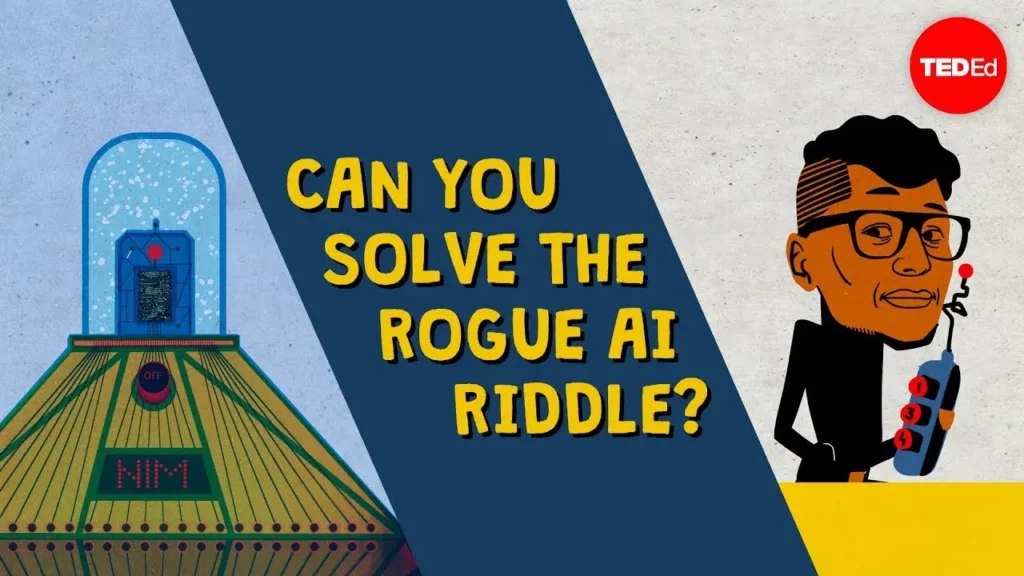
In the lesson “Can You Outsmart the Rogue AI?”, you are tasked with defeating a super-intelligent AI named NIM by strategically lowering the water level in its lab to zero before it can do so. The key to winning lies in understanding “winning” and “losing” levels, where certain water levels allow you to force NIM into a disadvantageous position. By starting at level 25 and using a calculated strategy to ensure NIM always begins its turn on a losing level, you can successfully shut down the AI and save the day.
What really happened to the Library of Alexandria? – Elizabeth Cox
The lesson explores the history and significance of the Library of Alexandria, which was established over 2,300 years ago with the ambition of gathering the world’s knowledge. While often thought to have been destroyed by fire, its decline was a gradual process influenced by political and cultural shifts, leading to the eventual loss of its vast collection. The legacy of the library serves as a reminder of the ongoing challenges in preserving knowledge and the importance of safeguarding against the fears that can threaten intellectual inquiry.