
Why should you read “Waiting For Godot”? – Iseult Gillespie
In “Waiting for Godot,” Samuel Beckett presents a profound exploration of existential themes through the circular and cryptic dialogue between two characters, Estragon and Vladimir, who are perpetually waiting for the elusive Godot. This play, emblematic of the Theatre of the Absurd, blends humor with despair, challenging traditional narrative structures and prompting audiences to reflect on the nature of purpose and meaning in a chaotic world. Beckett’s unique style, characterized by pauses and ambiguity, invites endless interpretations, ultimately encouraging viewers to embrace the uncertainty of existence.
What if cracks in concrete could fix themselves? – Congrui Jin
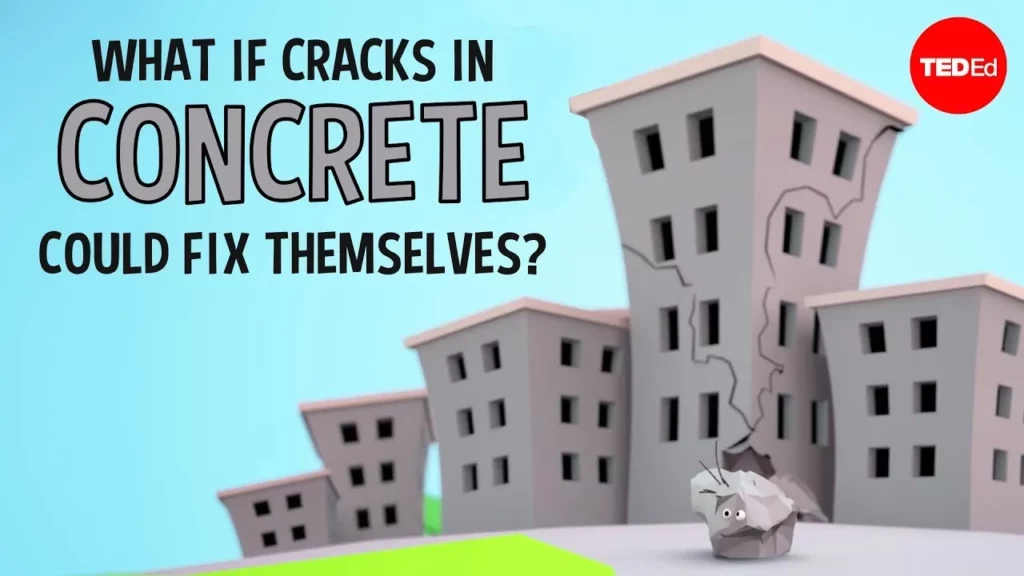
The lesson explores the concept of self-healing concrete, which addresses the common issue of cracking in concrete structures that can lead to costly repairs. It discusses the natural self-healing processes of concrete and innovative techniques involving microorganisms that can fill larger cracks, potentially revolutionizing construction by enhancing the durability and lifespan of concrete while reducing repair costs. This advancement could significantly impact urban infrastructure and sustainability in the future.
The princess who rewrote history – Leonora Neville
The lesson centers on Anna Komnene, the daughter of Byzantine Emperor Alexios Komnenos, who defied societal expectations by pursuing her intellectual passions and documenting her father’s reign in her work, *The Alexiad*. Despite the challenges faced by her family during turbulent times, Anna’s dedication to learning and her unique perspective allowed her to create a significant historical narrative that not only defended her father’s legacy but also showcased her own insights and emotional experiences. Through her writing, Anna demonstrated that women could contribute meaningfully to history, thus rewriting the narrative of their time.
Can you solve the stolen rubies riddle? – Dennis Shasha
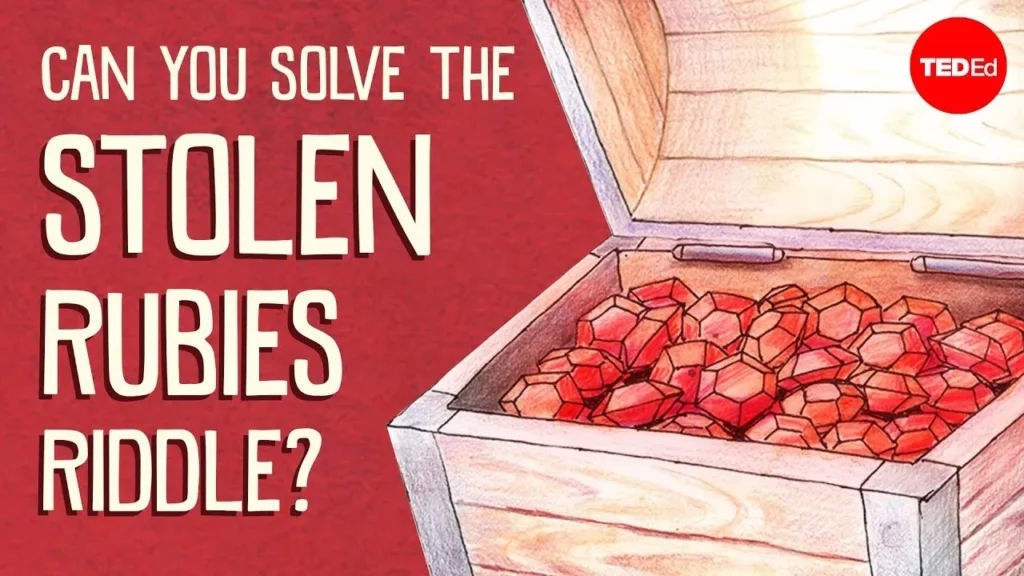
In this lesson, you are tasked with solving a riddle involving a wealthy merchant who must distribute his 30 rubies into three boxes under specific conditions. The strategy to maximize the number of rubies you can guarantee involves choosing the same number for each box, ensuring that you can secure at least 16 rubies by logically deducing the minimum amount in the boxes, thus recovering more than half of the merchant’s wealth for the townspeople.
How rollercoasters affect your body – Brian D. Avery
The lesson explores the evolution and engineering of roller coasters, highlighting their transition from dangerous early designs to today’s safer, thrilling rides. It explains the science behind roller coasters, including the role of gravity and G-forces, and emphasizes the importance of modern safety measures and engineering techniques that ensure a thrilling yet secure experience for riders. Ultimately, it showcases how advancements in technology have enhanced the excitement of roller coasters while prioritizing passenger safety.
The fascinating history of cemeteries – Keith Eggener
The lesson explores the evolution of cemeteries from lively communal spaces adorned with gardens to the quieter, more somber sites we often associate with them today. It traces ancient burial practices, the development of communal burial grounds, and the transformation of cemeteries through medieval and modern times, highlighting their changing roles in society. As urbanization and environmental concerns arise, new alternatives to traditional burials are being considered, reflecting our evolving ways of honoring the deceased.
Is fire a solid, a liquid, or a gas? – Elizabeth Cox
The lesson explores the nature of fire, clarifying that it is not a solid, liquid, gas, or plasma, but rather a phenomenon resulting from the chemical reaction known as combustion. Fire requires fuel, heat, and oxygen to exist, and its visible flames are produced by the release of light and heat during this reaction. Ultimately, fire is a transient event that engages our senses and eventually extinguishes when it runs out of fuel or oxygen.
How far would you have to go to escape gravity? – Rene Laufer
The lesson explores the concept of gravity, explaining how it is the force that attracts objects with mass towards each other, as described by Newton’s Law of Universal Gravitation. It highlights the varying effects of gravity on Earth and in space, illustrating that while gravity weakens with distance, it never completely disappears. The lesson concludes with a thought experiment about escaping gravity by moving towards the center of the Earth, emphasizing gravity’s role as a fundamental force that connects all objects in the universe.
Can you solve the secret werewolf riddle? – Dan Finkel
In this lesson, you take on the role of a detective tasked with identifying a werewolf among five suspects by using a limited amount of antidote. The challenge involves accurately dividing a 50-gram square of antidote into five equal 10-gram portions using a laser cutter, emphasizing the importance of experimentation and geometric reasoning to find a solution. Ultimately, through creative cutting and rearranging, you successfully distribute the antidote, preventing the transformation and ensuring the safety of the townspeople.
History vs. Henry VIII – Mark Robinson and Alex Gendler
The lesson explores the complex legacy of Henry VIII, highlighting the contrasting perspectives on his reign as both a transformative leader and a ruthless ruler. Through a courtroom drama format, it examines his controversial decisions, including his six marriages and the break from the Church of Rome, which had lasting impacts on England’s religious and political landscape. Ultimately, the lesson emphasizes the duality of Henry’s character, showcasing his contributions to England’s development while also acknowledging the suffering and turmoil his actions caused.