
Why should you read “Lord of the Flies” by William Golding? – Jill Dash
In “Lord of the Flies,” William Golding examines the darker aspects of human nature through the story of boys stranded on an island, where their initial attempts at order quickly devolve into chaos and savagery. Drawing from his experiences in World War II, Golding critiques traditional adventure narratives and colonialist themes, revealing how innocence can give way to brutality in the absence of societal structure. The novel serves as a timeless exploration of morality and civilization, prompting readers to confront the complexities of human behavior.
Why should you read “The Joy Luck Club” by Amy Tan? – Sheila Marie Orfano

In “The Joy Luck Club,” Amy Tan explores the complex relationships between Chinese immigrant mothers and their American-born daughters through interconnected stories that reflect themes of survival, cultural identity, and generational divides. The novel’s structure mirrors the game of mahjong, with narratives alternating between the mothers’ pasts in China and their daughters’ experiences in America, highlighting the struggles of reconciling heritage with personal identity. Ultimately, Tan illustrates how understanding one’s roots can provide strength in navigating contemporary challenges, resonating with readers through its universal themes of love and the desire for connection.
Master the art of public speaking
The lesson on mastering public speaking emphasizes the importance of effective communication in various contexts, from presentations to classroom teaching. The TED Masterclass offers an engaging 11-lesson course that guides learners through identifying, developing, and presenting compelling ideas, supported by insights from expert coaches. By participating in this course, individuals can enhance their public speaking skills and contribute positively to their audiences and communities.
Could a breathalyzer detect cancer? – Julian Burschka

The lesson explores the potential of breath analysis for detecting diseases, particularly cancer, by examining volatile organic compounds in exhaled breath. While breathalyzers measure ethanol levels to determine blood alcohol content, researchers are investigating how changes in breath composition could indicate the presence of diseases, including cancer, by identifying unique breath profiles associated with different conditions. Despite challenges such as low compound concentrations and external influences, advancements in sensor technology and early clinical trials suggest that breath analysis could become a non-invasive diagnostic tool in the future.
Can you solve the dragon jousting riddle? – Alex Gendler
In the lesson “Can You Solve the Dragon Jousting Riddle?”, participants are tasked with determining the correct scores of a dragon jousting tournament after receiving misleading information from a lying wizard. By analyzing the matches played between the elves, goblins, and treefolk, students learn to deduce the actual outcomes based on the constraints provided, ultimately concluding that the elves won against the goblins with a score of 2-1, while the match between the elves and treefolk ended in a tie of 2-2. This exercise emphasizes critical thinking and problem-solving skills in the face of deception.
The Artists | Think Like A Coder, Ep 5

In Episode 5 of “Think Like A Coder,” Ethic and Hedge embark on a quest to retrieve the Node of Power from a tower guarded by robots, with the help of Octavia, the director of a treehouse community. To create a distraction, they devise a plan where Hedge marks the residents’ paintings with an X, using two programming methods: the Typewriter Method, which involves painting row by row, and the Spiral Method, which paints in nested squares. Both methods successfully divert the guards, allowing Ethic and Hedge to advance toward the tower while highlighting the importance of strategic thinking in problem-solving.
What’s so special about Viking ships? – Jan Bill
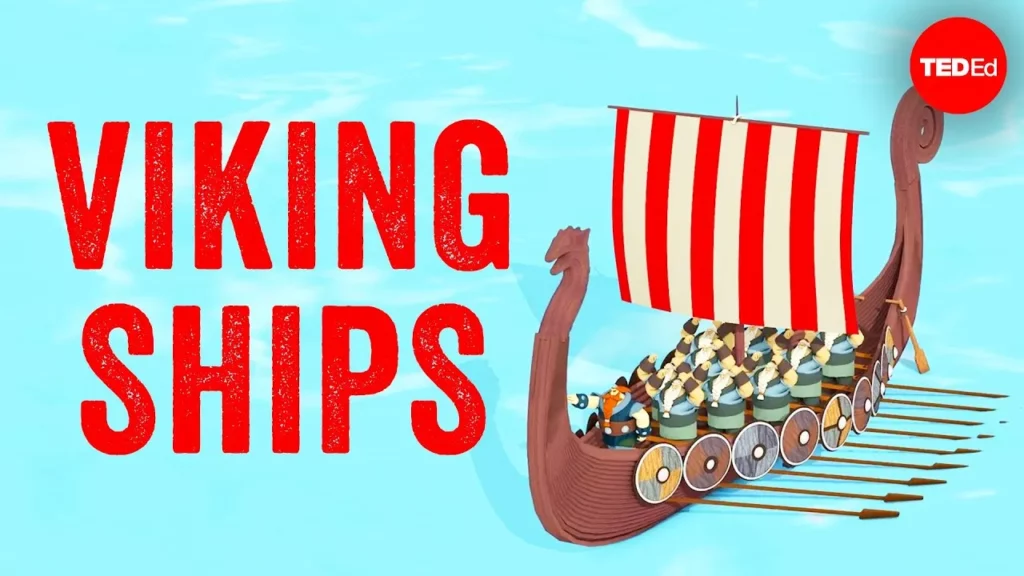
The lesson highlights the significance of Viking ships in the success of the Vikings, who emerged as a powerful force in Europe despite their humble beginnings in Scandinavia. Their innovative longships, which evolved from simple dugout canoes to advanced vessels incorporating Roman shipbuilding techniques, allowed them to navigate challenging waters, engage in trade, and conduct raids across vast distances. This mastery of ship design and sailing technology enabled the Vikings to explore and settle in regions like North America long before other Europeans.
The Chasm | Think Like A Coder, Ep 6

In “The Chasm Adventure,” Ethic, Hedge, and Octavia must build a stable bridge using special hover-blocks to cross a ravine and reach a tower containing a powerful artifact. The hover-blocks must be arranged in a palindromic sequence to remain stable, which requires understanding the characteristics of palindromes and efficiently counting the occurrences of each block type. While Hedge devises a faster method to identify a suitable stack, they successfully cross, but Octavia unfortunately falls behind.
The life, legacy & assassination of an African revolutionary – Lisa Janae Bacon
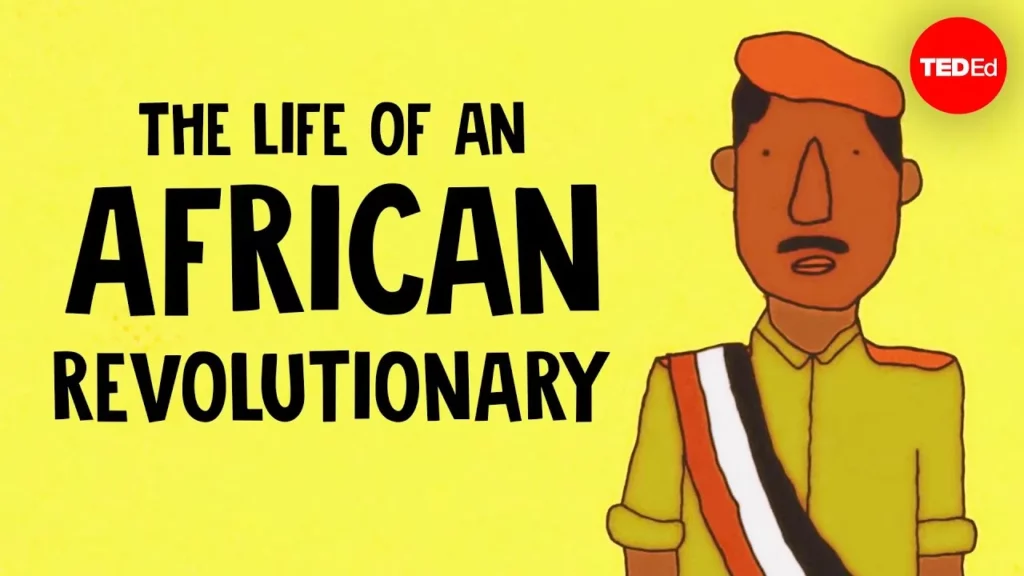
The lesson explores the life and legacy of Thomas Sankara, a revolutionary leader from Burkina Faso who rose to prominence in the 1980s. Inspired by his experiences in Madagascar, Sankara implemented progressive reforms focused on social justice, gender equality, and anti-corruption, ultimately renaming his country Burkina Faso. Despite facing significant opposition and being assassinated in 1987, his enduring legacy continues to inspire political movements and youth in Burkina Faso and beyond.
Do politics make us irrational? – Jay Van Bavel

The lesson explores how political beliefs can significantly influence rational decision-making, as demonstrated by a study where participants’ ability to analyze data was affected by their political affiliations. It highlights the concept of partisanship, which can lead individuals to dismiss evidence that contradicts their group beliefs, resulting in cognitive dissonance and irrational conclusions. To mitigate these effects, the lesson suggests strategies such as recognizing personal biases, fostering a culture of fact-checking, and framing discussions in ways that resonate with individuals’ values.