
How pigeons took over the world – Elizabeth Carlen and Joanna Moles
The lesson explores the remarkable journey of Paddy the Pigeon, who played a crucial role in delivering news during World War II, highlighting the historical significance of pigeons as messengers. It discusses how pigeons have thrived in urban environments due to their adaptability, breeding habits, and generalist diet, while also addressing the mixed perceptions of pigeons as both valuable companions and urban nuisances. Ultimately, the lesson underscores the long-standing relationship between humans and pigeons, shaped by both natural traits and human influence.
How do you know you’re not dreaming? – Daniel Gregory
The lesson explores the philosophical question of how we can be certain we are awake and not dreaming, a concept famously illustrated by Zhuangzi’s butterfly dream. It discusses various methods to distinguish waking life from dreams, including Descartes’ memory test, while highlighting the richness of waking experiences compared to dreams. Ultimately, the lesson emphasizes the philosophical challenge of justifying our belief in our awake state, questioning the nature of reality and perception.
The Chinese legend of the butterfly lovers – Lijun Zhang
The lesson of “The Butterfly Lovers” revolves around the themes of love, sacrifice, and the pursuit of one’s true identity. Zhu Yingtai, a determined young woman, disguises herself as a boy to gain an education, forming a deep bond with Liang Shanbo. Their love story ultimately highlights the tragic consequences of societal constraints, culminating in their transformation into butterflies, symbolizing the enduring power of love and the freedom it can bring.
A riddle of ice and fire dragons – Henri Picciotto
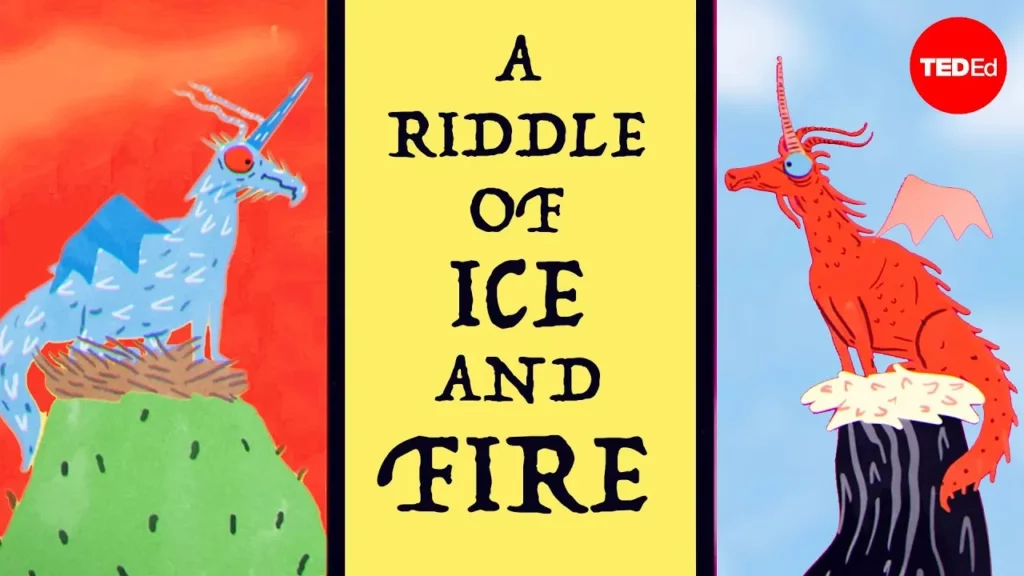
In this lesson, you take on the role of the official mapmaker for Center Realm, tasked with finding suitable living spaces for a variety of dragons while ensuring they are not placed next to others of the same type. You must creatively add new regions to accommodate the dragons, using strategic planning to avoid territorial conflicts, especially when faced with the added complexity of different dragon types. Ultimately, the lesson emphasizes problem-solving and logical thinking as you navigate the challenges of mapping and coloring regions to maintain harmony among the dragons.
Are the Northern Lights dangerous? – Fabio Pacucci
The lesson discusses the phenomenon of solar storms, particularly highlighting the historical Carrington Event of 1859, which caused a spectacular auroral display visible far beyond the poles. It explains how solar storms occur due to the Sun’s magnetic activity and the subsequent release of plasma, which interacts with Earth’s atmosphere to create the Northern Lights. While these events are generally not dangerous to humans, they can disrupt technology and electrical systems, prompting the need for improved predictive measures and protective strategies against future solar storms.
History vs. Tamerlane the Conqueror – Stephanie Honchell Smith
The lesson explores the life and legacy of Timur, also known as Tamerlane, who rose from humble beginnings in the 1330s to become a powerful conqueror of Central Asia, Afghanistan, and Iran. While his military campaigns were marked by brutality and significant loss of life, he also played a crucial role in reviving trade along the Silk Road and fostering cultural advancements, leaving a complex legacy that is viewed differently across regions. Ultimately, Timur’s impact on history is characterized by both his ruthless conquests and his contributions to art and architecture, influencing future empires, including the Mughal Empire in India.
Watch this if you’re scared of snakes – Andrew Whitworth
In this lesson, students embark on an engaging exploration of vipers, a unique group of snakes known for their venomous nature and fascinating adaptations. Through the introduction of various species, such as the eastern diamondback rattlesnake and the spider-tailed horned viper, learners discover the remarkable characteristics and survival strategies of these reptiles, as well as the clever tactics employed by their prey, like the desert kangaroo rat. Ultimately, the lesson emphasizes the importance of understanding and appreciating snakes within their ecological roles.
Ethical dilemma: Who should you believe? – Alex Worsnip

The lesson explores the ethical dilemma of whether to believe a loved one accused of a serious crime, despite compelling evidence against them. It examines two philosophical perspectives: evidentialism, which emphasizes the importance of evidence in forming beliefs, and pragmatism, which considers the emotional and relational implications of belief. Ultimately, the lesson challenges participants to reflect on the nature of belief and whether it can be controlled, prompting them to consider the balance between evidence and personal relationships in their decision-making.
The dark history of zombies – Christopher M. Moreman
The lesson explores the complex origins and cultural significance of zombies, tracing their roots back to Equatorial and Central Africa, where beliefs about spirits and the afterlife laid the groundwork for the concept. It highlights how the merging of African traditions with Caribbean vodou during the era of slavery transformed zombies into symbols of oppression, which were later misrepresented in Western pop culture, evolving into mindless monsters in films. Ultimately, the lesson emphasizes the importance of recognizing the dark history of zombies as a reflection of societal fears and issues throughout time.
How the Suez Canal changed the world – Lucia Carminati
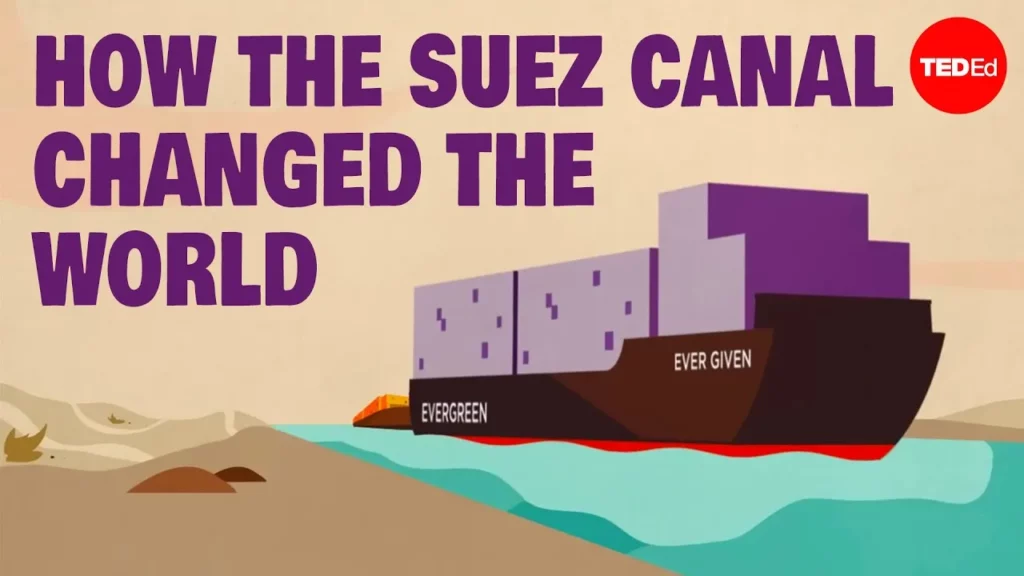
The lesson discusses the historical significance and impact of the Suez Canal, highlighting its construction and the challenges faced over the centuries. The 2021 incident involving the Ever Given container ship underscored the canal’s critical role in global trade, as its blockage disrupted international shipping and served as a reminder of the vulnerabilities in our interconnected systems. Ultimately, the Suez Canal has transformed trade routes and economies, becoming a vital artery for nearly 30% of global ship traffic today.