
Most Collisions Are Secretly in One Dimension
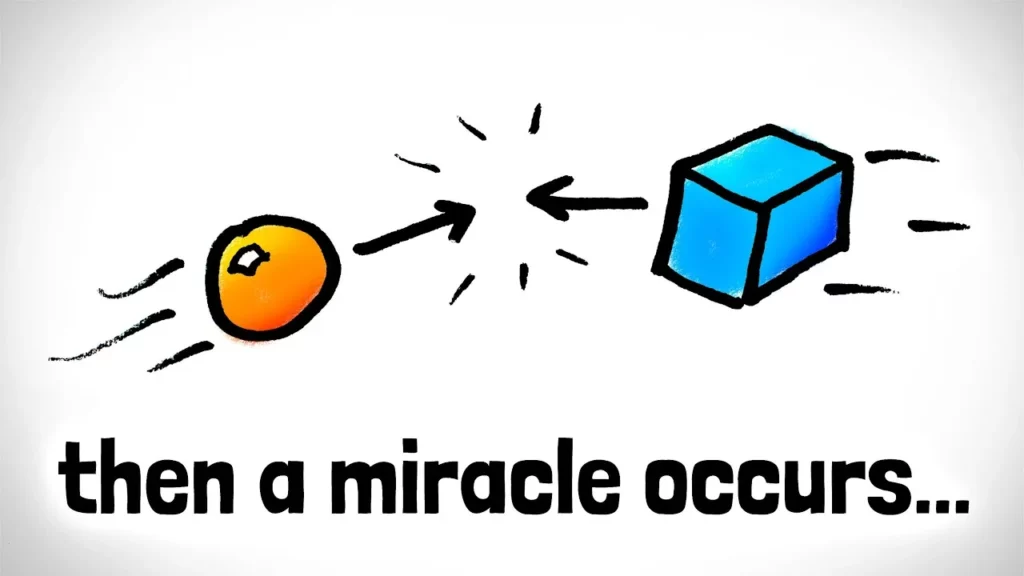
The lesson explores the underlying simplicity of collisions, emphasizing that despite their chaotic appearance, the outcomes can be precisely determined using the principles of conservation of momentum and energy. In one-dimensional collisions, these principles yield a unique result for the velocities of colliding objects, while even in two or three dimensions, the behavior often reduces to one-dimensional analysis. Ultimately, the lesson highlights that understanding the initial conditions and energy dynamics allows for accurate predictions of collision outcomes, making complex simulations feasible.
The Higgs Boson, Part I

The Higgs Boson, discovered on July 4, 2012, is a crucial component of the Standard Model of Particle Physics, serving as an excitation of the Higgs field, which explains the weak nuclear force and the mass of particles. Its inclusion in the Standard Model was essential for resolving mathematical issues related to mass, and its discovery completed the model, although it does not encompass all aspects of the universe, such as gravity. The Higgs Boson’s existence not only confirms theoretical predictions but also invites further exploration into the fundamental nature of the universe.
The Physics of Car Crashes
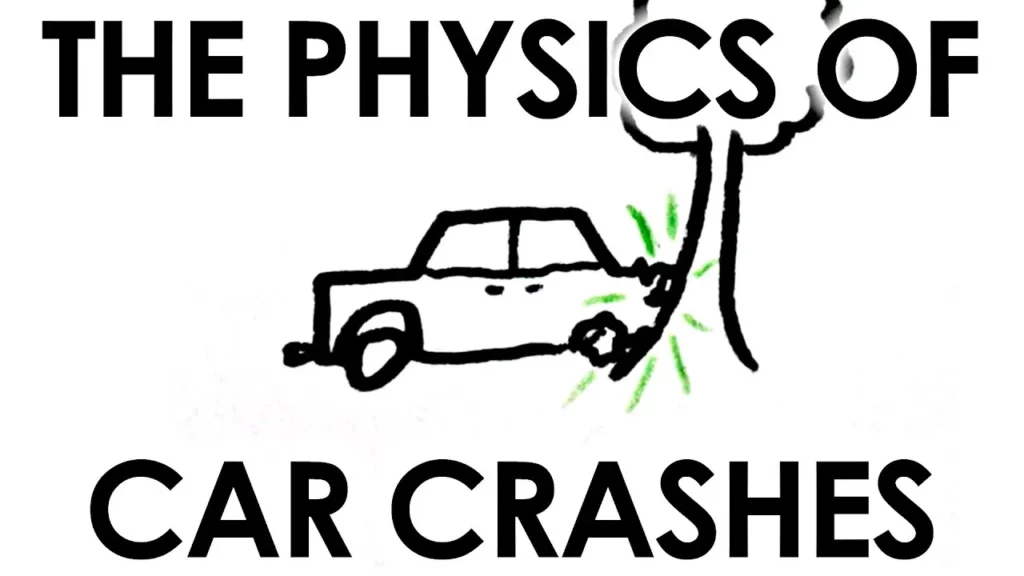
This lesson explores the powerful energy contained in gasoline and its transformation into kinetic energy for vehicle movement, highlighting that approximately 80% of this energy is lost as heat. It emphasizes the importance of car design, particularly crumple zones, which absorb energy during collisions to reduce the impact on passengers, making modern vehicles significantly safer than older models. Understanding these dynamics is crucial for recognizing how energy management and engineering contribute to road safety.
Solution to The Impossible Bet | The 100 Prisoners Problem

The lesson “The Box Challenge: A Surprising Strategy for Success” illustrates how a seemingly impossible task can be approached with a strategic mindset to improve outcomes. By utilizing a method that involves following a sequence or “chain” based on the dollar bills inside the boxes, participants can significantly increase their chances of success from nearly zero to over 30%. This strategy emphasizes the interconnectedness of individual efforts, highlighting that collective success hinges on a shared approach rather than random choices.
What if the Earth were Hollow?

This lesson explores the hypothetical scenario of digging a hole straight through the Earth, examining the challenges and scientific principles involved, such as the Coriolis effect and gravitational changes. It highlights that while the idea is intriguing, practical limitations like extreme temperatures and the molten core make it impossible. Ultimately, the lesson serves as a thought experiment to deepen our understanding of Earth’s structure and the forces at play.
Myths and Facts About Superintelligent AI

The lesson explores the debate surrounding the potential for Artificial Intelligence (AI) to replace humans, highlighting differing perspectives on whether AI will become a superintelligent threat or a beneficial tool. Key concerns focus on the alignment of AI’s goals with human values, emphasizing the importance of ensuring that as AI evolves, it remains beneficial and aligned with humanity’s collective interests. The lesson encourages public involvement in shaping AI policy and research to foster a future where AI enhances human capabilities rather than poses risks.
How Long To Fall Through The Earth?

In this lesson, we explore the hypothetical scenario of falling through a hole that goes straight through the Earth, using simplified physics concepts. As you fall, the gravitational force changes, decreasing as you approach the center, and it would take approximately 38 minutes to reach the other side, accounting for Earth’s varying density. While this thought experiment is purely theoretical, it provides insight into gravitational dynamics and motion.
The Trinity of Quality
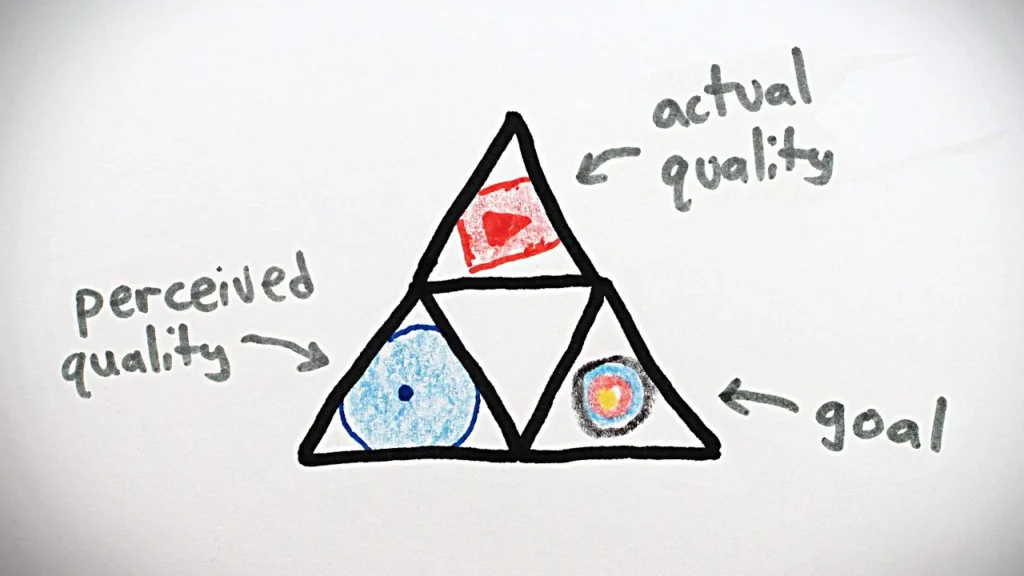
The lesson on “The Trinity of Quality” emphasizes the importance of understanding three key components—actual quality, taste, and discernment—in achieving creative excellence. Actual quality refers to the objective measures of a work’s effectiveness, taste reflects personal and cultural preferences for quality, and discernment is the ability to accurately assess the quality of one’s work. By recognizing and improving these elements, creatives can make informed decisions about when to finalize their projects and enhance their overall output.
Why Some Days Aren’t 24 Hours

In the lesson “Understanding Days: A Journey Through Time,” students explore the concept of a “day” from different perspectives, including stellar and solar days, and how these relate to Earth’s rotation and orbit around the sun. The lesson emphasizes that while a day is commonly understood as a 24-hour period, this definition is a human invention based on precise atomic measurements rather than natural celestial cycles. By the end, students gain a deeper understanding of how timekeeping varies across different contexts, preparing them to communicate effectively with extraterrestrial beings.
A Brief History of Everything, feat. Neil deGrasse Tyson

The lesson “The Cosmic Journey: From the Big Bang to Us” explores the evolution of the universe from its inception approximately 13.7 billion years ago to the emergence of life on Earth. It details the processes of cosmic expansion, the formation of matter and galaxies, the creation of elements necessary for life, and the eventual rise of humanity, emphasizing our intrinsic connection to the cosmos and the shared atomic heritage that links us to the universe. The lesson concludes with a call to continue exploring the wonders of the universe.